
- Infertility in men and women
Sale!


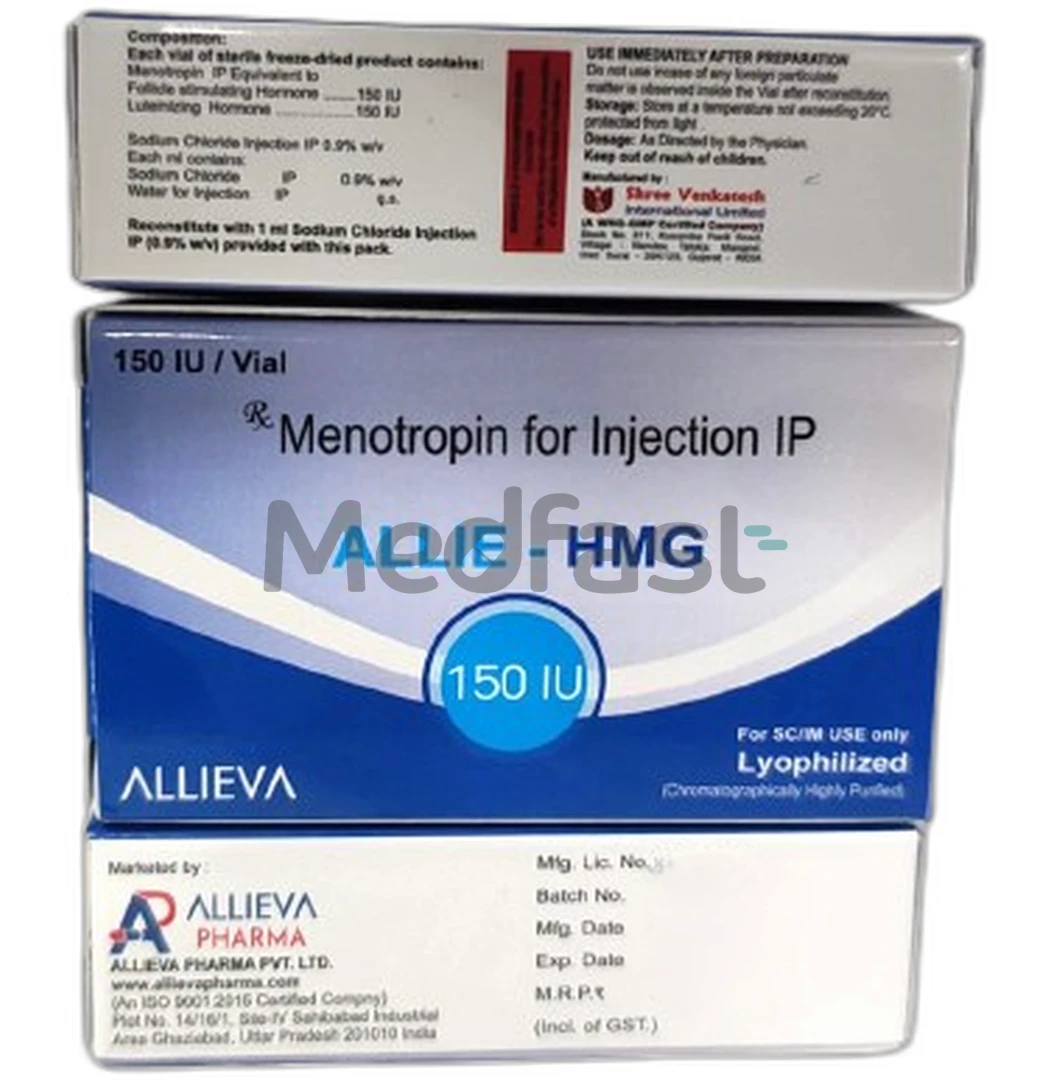
ALLIE-HMG 150
2-8* C
MENOTROPHIN 150IU
| MRP | : |
|
| Price | : | ₹1,050.00 |
| You Save | : | ₹750.00 (41.67%) |
1 Vial(s)
Prepaid Only. Non-Returnable.
This medicine is prepaid only and cannot be returned once delivered.
Allie HMG 150IU Injection contains Menotrophin as its active ingredient. This medication acts as an ovulation stimulator and is classified under gonadotropins. It is a refined blend of follicle-stimulating hormone (FSH) and luteinizing hormone (LH), both of which are natural hormones produced in males and females. These hormones are essential for the normal functioning of reproductive organs.
Allie HMG 150IU Injection is prescribed for treating infertility in women who do not ovulate, including those with polycystic ovarian disease, particularly when they have not responded to clomiphene citrate treatment. Additionally, it is utilized to stimulate the development of multiple follicles, thereby enhancing fertility in women undergoing IVF (in-vitro fertilization) or other assisted reproductive techniques. Furthermore, it is indicated for treating male infertility caused by low sperm count.
Patients should avoid using Allie HMG 150IU Injection if they are allergic to menotrophin or any of its components. This medication is contraindicated in individuals with tumors in the pituitary gland (located at the brain’s base and responsible for producing certain hormones, including growth hormones), hypothalamus (an area beneath the thalamus that regulates body conditions such as temperature and blood pressure), or tumors in the uterus, ovaries, breasts, testicles, or prostate gland. Prior to starting treatment, a thorough evaluation for underactive thyroid issues, hormone levels, and tumors in the pituitary and hypothalamus will be conducted.
This medication should not be taken if you have ovarian cysts unrelated to PCOD, experience vaginal bleeding, are in early menopause, have physical abnormalities in the reproductive organs, have had a hysterectomy, or are pregnant or breastfeeding. It is crucial to inform your healthcare provider immediately if you experience symptoms such as abdominal pain and swelling, weight gain, diarrhea, difficulty breathing, or reduced urination. Additionally, notify your physician if you have a history of liver issues or blood clotting disorders.


