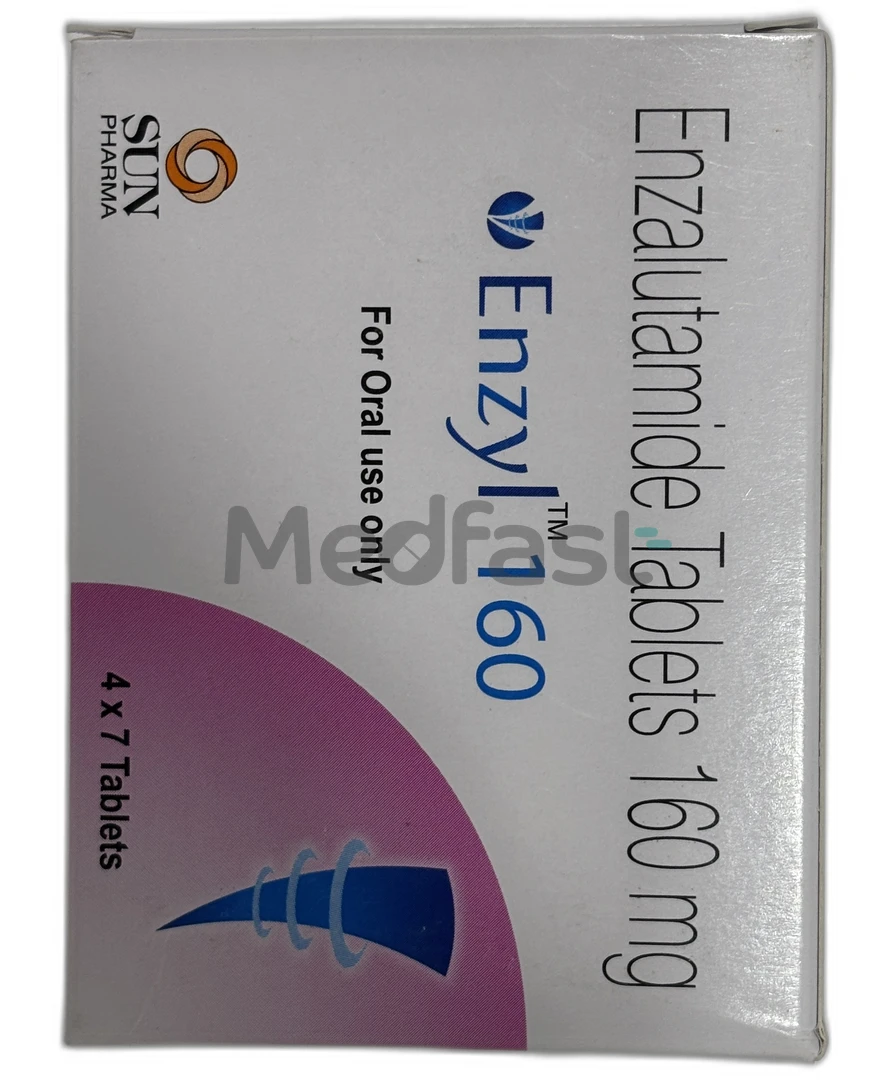
Enzyl 160 Tablet is classified as an androgen receptor inhibitor and is utilized in the treatment of prostate cancer. Cancer is characterized by the uncontrolled growth and reproduction of cells in a specific area of the body. These malignant cells can invade and damage nearby healthy tissues, including organs. Prostate cancer is a form of cancer that exclusively affects men, targeting the prostate gland, a small gland located beneath the bladder that is responsible for semen production.
Enzyl 160 Tablet contains Enzalutamide, which acts as an androgen receptor blocker (inhibitor). This medication prevents testosterone from reaching the prostate cancer cells, as most prostate cancers depend on testosterone for their growth. Consequently, this can help slow down the cancer’s progression and may even lead to a reduction in its size.
It is essential to use this medication as prescribed by your healthcare provider. You may occasionally experience symptoms such as difficulty breathing (pneumonia), unusual fatigue or weakness, back pain, diarrhea, joint pain, swelling in the hands, arms, legs, or feet, muscle or bone discomfort, muscle weakness, headaches, cold-like symptoms, dizziness, elevated blood pressure, and difficulties with sleep (insomnia). Most of these side effects are likely to diminish over time. However, if they persist or worsen, it is important to consult your physician.
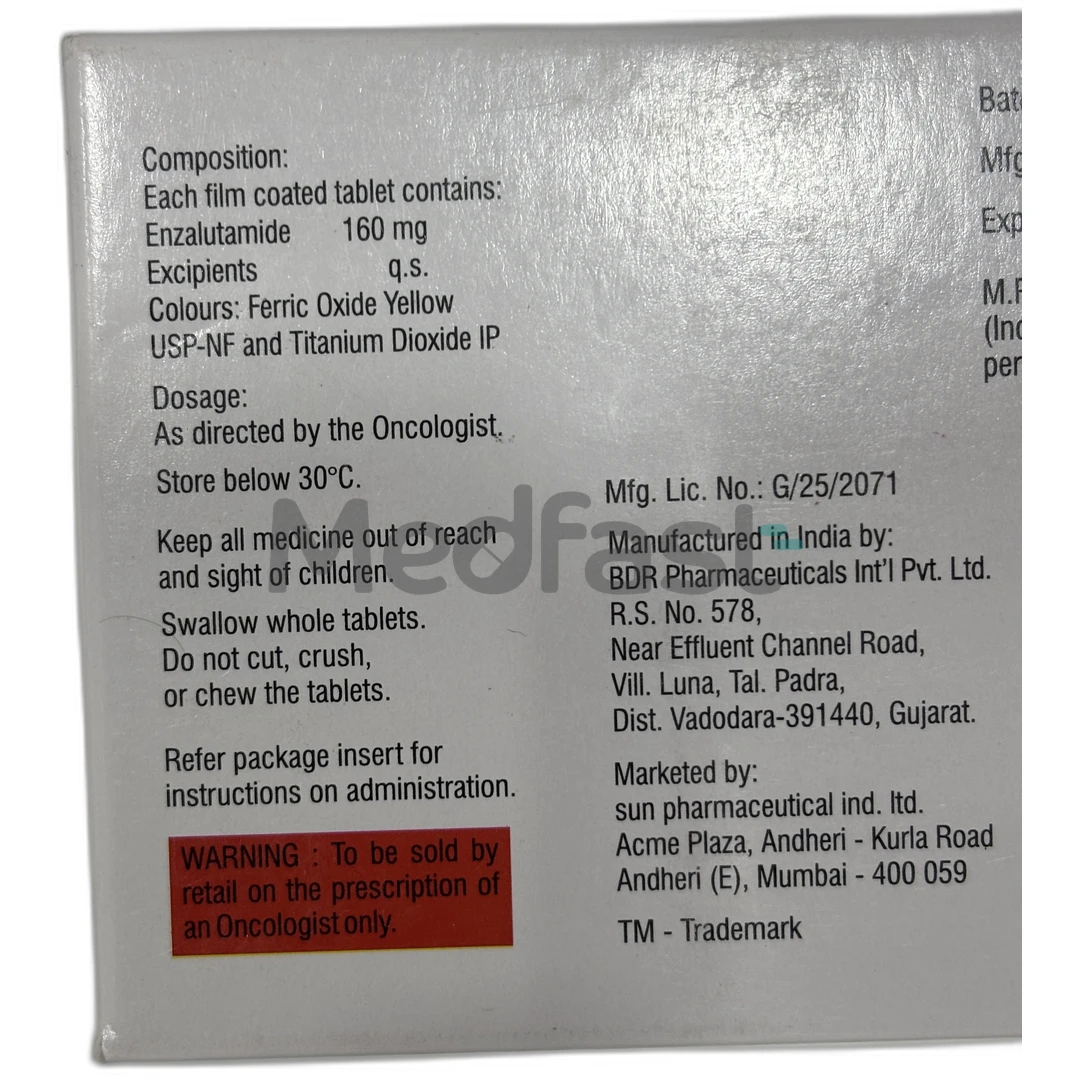
Enzalutamide is intended solely for male patients. Men taking Enzyl 160 Tablet must employ effective birth control methods during treatment and for three months following their last dose. In rare instances, Enzyl 160 Tablet may lead to seizures, so it is crucial to inform your doctor if you have a history of seizures. Due to the potential risk of seizures associated with the use of Enzyl 160 Tablet, patients should be cautioned about engaging in activities that could pose a danger to themselves or others in the event of sudden loss of consciousness. Alcohol consumption is strongly discouraged.